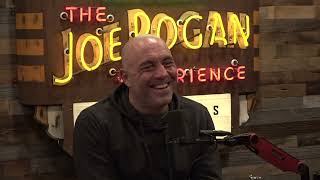
Source Video
Joe Rogan Experience #1791 - Sadhguru
This is a root-cause diagnosis linking dead soil to frail bodies and compulsive minds, not another farming or wellness talk. You'll walk away with a unified mental model that treats depleted earth and uncontrolled inner chemistry as the same problem.
- 1Industrial plowing and chemicals have killed soil's living ecosystem, slashing micronutrients in food to roughly 10% of 1920 levels and forcing bodies to overeat for missing building blocks.
- 2The resulting deficiencies drive obesity, chronic disease, and the predicted mental illness pandemic even in wealthy nations, as seen in 90% vitamin shortfalls and farmer suicide rates.
- 3Only continuous return of plant and animal organic matter can revive soil while humans must learn to consciously manage their thoughts, emotions, and chemistry instead of reacting compulsively.
How do we scale tree-based regenerative systems globally fast enough to restore soil in the 45-60 years before major collapse without crashing food production?
How Soil Depletion Is Making Us Physically and Mentally Weak
Core Question: What happens when the living system that feeds us becomes exhausted, and how is that exhaustion connected to the way we think, feel, and behave?
At a Glance
- This is a wide-ranging conversation between Joe Rogan and Sadhguru that begins with a gift of an Indian mint plant and expands into the global soil crisis, its effect on human nutrition, and the need for conscious self-management.
- Soil is a living marketplace of organisms; modern monoculture and chemical farming have destroyed its organic content, causing nutrient levels in food to drop dramatically.
- The resulting micronutrient deficiencies drive overeating, obesity, disease susceptibility, and mental health problems even in wealthy nations.
- Restoring soil requires returning organic matter from plants and animals; this is not optional and cannot be replaced by technology.
- Human well-being ultimately depends on taking charge of our internal chemistry rather than seeking happiness through external consumption or chemicals.
What the Speaker Is Really Doing
Sadhguru is not delivering a lecture or a spiritual sermon. He is diagnosing a single root problem that spans agriculture, public health, and human consciousness. He begins with the physical reality of soil, using statistics, historical examples, and farming mechanics to show that the ground beneath us is dying. From there he draws a direct line to human bodies and minds, arguing that the weakness we see in modern populations is not primarily a failure of willpower or genetics but a consequence of eating food grown in depleted earth.
The conversation then pivots to the inner dimension. Once the soil problem is established, Sadhguru insists that fixing the external world alone is not enough. People must learn to manage their own systems—thoughts, emotions, chemistry—so they stop reacting compulsively and start responding consciously. The tone moves from urgent ecological warning to practical optimism: both the land and the human being can be regenerated if we apply the right methods.
This is not a call to return to pre-industrial farming or to adopt any particular religion. It is a synthesis that treats soil as the common ground—literally and metaphorically—that unites people across all divides. The evidence is a mixture of established science (topsoil loss, nutrient decline, Dust Bowl history) and observational data from Sadhguru’s long engagement with farmers. The strength lies in the coherence of the picture rather than any single peer-reviewed citation.
The Core Ideas
Soil has become a dead substrate instead of a living system, and the consequences are already measurable.
Why this isn’t obvious: Most people see dirt as inert background material. They assume that as long as crops grow and supermarkets stay full, the ground is fine.
Evidence from the source: A handful of healthy soil contains 7 to 10 billion organisms and 50,000 to 75,000 species. ▶ 8:01 Modern plowing turns the soil 12 to 14 inches deep, exposing it to sunlight and killing that life. UN agencies estimate 60 to 80 more harvests—roughly 45 to 60 years—before major collapse, but the decline is already visible in falling nutrient density and rising input costs. Sadhguru notes that 50 percent of American farmers have not made a profit in 12 years and that farming has the highest suicide rate of any profession. ▶ 5:03 He cites studies showing that the micronutrients in a given vegetable have dropped to roughly 10 percent of 1920 levels. To get the same nutrition from an orange today that one orange provided a century ago, he says, you would need to eat eight. ▶ 9:59_
“We had rich soil… suddenly the crops burst out… then we forgot that we have to put organic content we just started putting these salts forever and in 25 to 30 years time the soil becomes fallow.”
What follows: If the base of the food chain is weakening, every creature that eats from it—including humans—becomes weaker. No amount of supplementation or medical intervention can fully compensate for food that lacks the basic building blocks.
The same soil crisis is driving modern epidemics of obesity, chronic disease, and mental illness.
Why this isn’t obvious: We treat these problems as failures of personal discipline, genetics, or “bad food choices” without connecting them to the literal ground the food grew in.
Evidence from the source: When food lacks nutrients, the body keeps signaling for more. This creates constant hunger even when calories are abundant. Sadhguru lists widespread American deficiencies—90 percent for vitamin E, high percentages for D, A, C, zinc, magnesium—and links them to increased susceptibility to respiratory infections and mental illness. ▶ 18:49 The WHO, he notes, is predicting a mental illness pandemic. ▶ 25:37 He points to Japan in 2020, where more people died by suicide than of coronavirus. The conversation also references the Dust Bowl of the 1930s, when vast amounts of American topsoil blew across the continent and into the Atlantic. ▶ 10:58_
What follows: Treating symptoms with pills while the soil continues to degrade is a temporary bridge, not a cure. A population that is micronutrient-starved will require ever more medical intervention. The 3.5 trillion dollars the United States spends annually on healthcare becomes less surprising when food itself is deficient. ▶ 21:42_
Organic content can only come from plant and animal life; technology cannot create it. Tree-based agriculture offers a scalable alternative.
Why this isn’t obvious: The dominant narrative presents the choice as chemical agriculture versus romantic “organic” gardening by urban idealists.
Evidence from the source: Sadhguru explains that after 25 years of work, his foundation has shifted hundreds of thousands of farmers to tree-based agriculture. Trees provide shade, generate green material for mulch, and support animal integration. Monoculture removes everything at once, leaving soil bare for months. In contrast, diverse systems keep living roots and organic matter in the soil continuously. He emphasizes that even a corn farmer who refuses to grow anything else can restore soil by chopping the stalks and returning them instead of baling or burning them. ▶ 16:51_
“There is no way you can generate organic content with technology. It’s only plant life and animal life which can create organic content.”
What follows: Policy makers and farmers do not need to choose between yield and sustainability. Properly designed regenerative systems can produce more food on less land while rebuilding the soil. The alternative is continued decline in both nutrition and farmer viability.
Human experience is generated from within; compulsive reaction to the outside world is the real slavery.
Why this isn’t obvious: Culture teaches us that happiness, peace, and success come from external conditions—money, status, the right food, the right pills.
Evidence from the source: Sadhguru uses a simple test: if someone abuses you in a language you don’t understand, the words cause no pain. The pain comes only from your reaction. He describes patterns of thought, chemistry, and energy that become ruts so deep that even when people want to change, they slide back. The tools offered through Inner Engineering are practical methods to break those patterns—how to sit, breathe, and manage internal chemistry—rather than new beliefs. ▶ 31:20 He notes that 2.2 billion video views and 16 million volunteers suggest these tools produce tangible results across cultures and ages._
What follows: No amount of soil restoration will create a healthy population if people remain internally compulsive. Conversely, individuals who learn to manage their inner states make better choices about the external world, including how they treat the land.
Connecting the Dots
The four ideas form a single loop. Depleted soil produces nutritionally empty food. Empty food weakens bodies and brains. Weakened people become more compulsive and less conscious. Compulsive, unconscious people continue destructive agricultural and lifestyle practices. The loop can be reversed at either end—by regenerating the soil or by regenerating human attention—but lasting change requires both. Soil becomes the unifying physical fact that makes Sadhguru’s spiritual message concrete: we all come from the same source, we are all affected by its degradation, and we all have the capacity to become conscious stewards of it.
Where the Value Really Lies
The value is not in shocking new scientific discoveries but in clear synthesis and framing. ▶ 59:58 Sadhguru connects well-documented facts about topsoil loss and nutrient decline to everyday human suffering in a way that feels immediate rather than academic. The ecological warnings are sobering but not apocalyptic; the emphasis stays on practical restoration and personal agency. The conversation avoids blaming any single company or political side, instead pointing to unconscious, compulsive behavior as the common human error. This framing makes the material accessible to listeners who normally tune out either environmental lectures or spiritual talks._
The Open Question
If micronutrient deficiency is already driving measurable increases in mental illness and chronic disease, how long will society continue treating the symptoms with more chemicals before it treats the source—both in the soil and in human consciousness?
One Line to Remember
“We all come from soil, live off the soil, and when we die we go back to the soil. The only question is whether we get it now or when we’re buried.” ▶ 38:22_
Further Reading
These X posts expand the conversation beyond soil regeneration and inner mastery, surfacing real-world scaling hurdles, nutrient critiques, metabolic parallels to mental compulsion, regenerative success stories, and counterarguments on tree-based systems—bridging back to the soil-body-mind loop through shared mechanisms of depletion, deficiency-driven dysfunction, and reversal strategies.[1]
European Alliance for Regenerative Agriculture white paper on 50 farms
Field data shows regen ag matching yields with zero synthetics, 45% higher crop nutrients, and 300% better carbon sequestration—directly tackling the source's micronutrient crash while proving economic viability for scaling without production dips.[1]
Karl Thidemann on tree planting failures in brittle biomes
Pushing back on direct tree scaling, he argues degraded soil kills seedlings unless healed first via regenerative grazing, which awakens dormant seeds—echoing the unanswered question's tension between trees and immediate food security.[2]
Sam Knowlton on regen grazing vs. industrial monoculture
Contrasts chemical-deadened fields with multi-species pastures that build soil naturally year-round, highlighting biodiversity and resilience gains—applying the loop's reversal to livestock as a faster, production-safe alternative to pure tree systems.[3]
Grace Price on metabolic roots of depression
Links major depressive disorder to impaired brain energy from ultra-processed foods and mitochondrial dysfunction, mirroring soil depletion's "empty calories" effect on bodies and compulsivity—shifting from spiritual to biochemical consciousness management.[4]
Georgia Ede on dietary guidelines fueling brain risks
Critiques carb-heavy guidelines ignoring brain biology, pushing fortified junk over nutrient-dense meats—paralleling industrial farming's nutrient stripping and offering a "regenerate human chemistry" lever independent of soil fixes.[5]
Alastair Trickett's turnaround of a collapsing 65,000-acre Australian farm
Documents shifting from 0.29% soil carbon and sandblow to regeneration, proving practitioner war stories where holistic practices reverse depletion at scale—concrete evidence for breaking the destructive loop on marginal lands.[6]
Brazil Caatinga study: stopping grazing alone fails soil recovery
Even after years of rest, overgrazed soils show no microbial rebound without active inputs like green manure and canopy trees—tempering optimism on passive reversal and demanding deliberate action, akin to conscious thought management.[7]