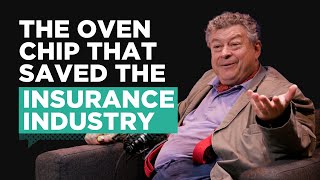
Source Video
Brand New: The Best Rory Sutherland Interview You'll Ever Watch (4K)
Not another 'attention is dead' complaint; it's Rory Sutherland explaining how attention is polarizing while efficiency destroys trust. You'll walk away with a mental model for counter-trends and costly signaling that reveals why irrational choices win.
- 1Attention isn't shrinking but splitting into snackable bites and intense deep dives on whatever truly matters in the moment, making the old uniform TV era the real historical anomaly.
- 2Every logical trend like lower prices and more efficiency automatically creates counter-trends like farmers' markets that satisfy unstated emotional needs people can't articulate in surveys.
- 3Influencers and mass advertising work through costly signaling where reputation is at risk, creating trust that hyper-efficient targeted ads destroy by appearing too manipulative.
How does a large corporation build systems to deliberately create and scale these counter-trend products without getting crushed by efficiency metrics and risk-averse decision-making?
Attention Isn't Dying—It's Polarizing: Rory Sutherland on Trust, Counter-Trends, and Why Marketing Must Embrace Irrationality
Core Question: What if the real challenge for brands isn't capturing fleeting attention but understanding why people pay obsessive attention to some things while ignoring others, and how trust forms in a world drowning in efficient but untrustworthy messages?
At a Glance
- This is a wide-ranging, thematic interview where Rory Sutherland challenges conventional marketing wisdom through behavioral insight, personal anecdotes, and counter-intuitive examples rather than a linear argument.
- Attention spans are polarizing into short-form snacking and deep immersion, not simply shrinking.
- Counter-trends satisfy unspoken human needs that logical market research misses.
- Influencer marketing succeeds because it uses costly signaling and reputation as hard-to-fake indicators of trustworthiness.
- Business success favors fat-tailed thinking comfortable with uncertainty, anomalies, and luck over deterministic efficiency metrics.
- The most reliable business indicator is repeat purchase from fully informed customers, not short-term attribution.
What the Speaker Is Really Doing
Rory Sutherland is exploring rather than strictly arguing. He moves fluidly between topics—attention, content, marketing, trust, entrepreneurship, and decision-making—using the interview format to connect ideas through stories, analogies, and provocations. The conversation builds from questioning the narrative of dwindling attention spans to revealing deeper patterns about human behavior and business.
He repeatedly highlights vectors and counter-trends, showing how every logical trend (lower prices, more choice, efficiency) creates space for its opposite (farmers' markets, costly signaling, deep immersion). This isn't a tutorial or sales pitch; it's synthesis drawing on his advertising experience, behavioral economics knowledge, and observations of real-world anomalies.
The value lies in reframing. Sutherland doesn't offer step-by-step advice but challenges the efficiency-obsessed mindset pushed by tech and management consulting. He shows how optimizing for cheap message transmission has de-optimized for credibility, and how comfort with uncertainty separates entrepreneurs from corporate thinkers. The transcript is conversational and rambling at times, yet the recurring tension between stated preferences and revealed behavior, efficiency and signaling, and evidence-based rigidity and discovery creates a coherent worldview.
The Core Ideas
Attention spans are polarizing into info-snacking and deep immersion, not simply dwindling.
This challenges the common complaint that TikTok and shorts are destroying focus. Sutherland argues the real anomaly was the artificial uniformity of 1955–2005 television, where everything was roughly the same length. ▶ 6:00
"I don't think attention spans are actually dwindling. I think they're polarizing."
He compares it to ADHD—people with the condition can show extraordinary concentration when truly interested. ▶ 14:45 Evidence comes from YouTube's dual role: short-form entertainment alongside incredibly specific, useful content like "how to unblock a frozen boiler vent pipe in extremely cold weather," which becomes compelling exactly when needed. ▶ 6:35 He notes people now listen to long podcasts and audiobooks in cars, something he would have found unbelievable in 1994.
If true, brands shouldn't chase universal short attention but create content that matches different modes—useful, funny, sexy, or sublime. This implies education and information campaigns could succeed by leveraging voluntary deep attention rather than fighting supposed universal distraction.
Counter-trends satisfy unstated preferences that logical trends leave behind.
Sutherland's most valuable framing is that every trend creates its opposite, often meeting needs people cannot articulate.
"I'd like lower prices and more choice. That's Tesco extra, right? The counter trend is a farmer's market."
No one would rationally say they want to pay more, visit multiple stalls outdoors, and complete separate transactions, yet farmers' markets thrive. ▶ 28:20 This reveals "revealed preference"—what people actually do versus what they say in surveys. Marketing's highest value, he argues, is discovering "those things which consumers really really want but don't know how to ask for."
Examples include Red Bull (expensive, small, tastes bad) and jeans (uncomfortable, fades, maintenance-heavy) dominating despite logical alternatives like advanced synthetic fabrics from ICI. ▶ 30:45 This challenges the assumption that consumer research should focus on stated needs and suggests successful brands often succeed by satisfying psychological or theatrical needs the rational mind dismisses.
Influencer marketing works through costly signaling and reputation at risk, not just reach.
Sutherland explains why influencers like James Hoffman succeed where digital banner ads fail. When an expert with deep credibility recommends something, their reputation acts as skin in the game. ▶ 37:00
"If James Hoffman recommends a coffee... you don't know that's the best coffee in the world actually, but you do know it certainly can't be a piece of []."
He cites a Caribbean proverb: "Trust grows at the speed of the coconut tree and falls at the speed of a coconut." The influencer risks their entire audience if they recommend rubbish, and they expose themselves to knowledgeable peers who would call them out. This contrasts with efficient digital marketing, which optimizes transmission but destroys credibility.
The insight extends to why mass media advertising works as signaling—if you're spending heavily to reach everyone, it suggests confidence the product won't disappoint. Efficient targeting can fake scale, but indiscriminate reach cannot. This explains why people trust Wikipedia or specific YouTube experts over search results filled with paid placements.
Businesses should obsess over customer retention and embrace fat-tailed thinking rather than efficiency metrics.
The only metric that matters is whether fully informed customers buy again. Sutherland criticizes call centers as "cost centers" when excellent service creates massive brand loyalty, citing his sudden admiration for Southern Water after one helpful call and Royal Mail's brand perception being tied to liking your postman. ▶ 40:00
He contrasts corporate discomfort with anomalies against entrepreneurial excitement. Entrepreneurs thrive in "dynamic uncertainty," using anecdotal information and playing games like poker where one great hand can change everything—unlike chess, where brilliance earns only one point. ▶ 46:00
"Marketing is fat tailed in that 10% of what you do probably delivers 120% of the value."
This challenges evidence-based rigidity, especially in novel situations. Sutherland's COVID reasoning—using observation of postmen and spiderwebs rather than waiting for perfect evidence—illustrates how demanding scientific standards in chaotic domains misapplies the method. ▶ 51:00 Aristotle, he notes, said science applies where things "cannot be different from the way they are."
Connecting the Dots
When viewed together, these ideas reveal a consistent pattern: human behavior and markets are not primarily rational optimization problems but complex systems driven by signaling, reputation, unstated needs, and uncertainty. The efficiency mindset—pushed by tech companies selling measurement tools—has created blind spots everywhere. Polarized attention, counter-trends, influencer credibility, and retention all depend on understanding what cannot be easily measured or faked. Marketing's role isn't delivering messages cheaply but creating conditions where trust can form and irrational but deeply human preferences can surface.
Where the Value Really Lies
The value here is in synthesis and clarification, not radical novelty. Sutherland weaves together ideas from behavioral economics, evolutionary psychology, and his advertising career into an accessible framework that challenges the dominant efficiency narrative without requiring the reader to accept every provocative claim. The evidence is mostly anecdotal and observational—speed awareness courses, YouTube habits, farmers' markets, personal experiences with call centers—but the patterns he identifies are compelling because they match observable reality better than spreadsheet-friendly models.
His critique of tech-driven metrics as "mind viruses" planted by companies selling solutions is particularly sharp. The source doesn't prove these ideas with rigorous data, but it doesn't need to. Its strength is in shifting perspective: from linear trends to vectors, from stated to revealed preference, from efficiency to signaling. If correct, much current marketing practice is not just ineffective but actively harmful to trust and brand-building.
The Open Question
If marketing and business should embrace uncertainty and fat-tailed outcomes, how should large organizations—built around predictability, procurement, and quarterly metrics—actually implement this without collapsing into chaos? Sutherland hints at the problem but offers no clear path for legacy companies.
One Line to Remember
"Marketing is there to discover those things which consumers really really want but don't know how to ask for."
Further Reading
These X posts extend Rory Sutherland's interview by probing the tension between efficiency and trust in noisy environments, scaling irrational innovations amid corporate bureaucracy, and applying costly signaling beyond marketing to biology and evolution. They mix direct echoes with adjacent critiques and biological analogies, revealing blind spots in rationalist approaches.
Visibility vs. Credibility in Attention Games[1][2]
A developer contrasts short-lived visibility spikes with compounding credibility, while a startup founder quotes Sutherland on scarce attention demanding "bigger things" like hype videos—not for users, but investors.[1] This builds on polarized attention by showing how scarcity forces costly signals in funding, where efficiency metrics undervalue reputation risks.
Noise Raises the Cost of Truth-Seeking[3]
In high-noise info environments, updating beliefs becomes too costly, prioritizing belonging over truth—necessitating tech redesigns. Echoes Sutherland's counter-trends by framing efficiency-driven platforms as creators of unmeasurable epistemic blind spots, where trust erodes faster than it builds.
Bureaucracy Crushes Product Innovation[4]
A three-time CPO details how scaling teams breeds meetings, processes, and policies that diffuse ownership, encourage risk-aversion, and prioritize optics over outcomes. Directly tackles the unanswered question on corporate systems for counter-trends, arguing aggressive pruning (e.g., "cancel all meetings") is needed to avoid efficiency traps killing unstated needs.
Exotic Metrics: The Path to Stupidity[5]
Product leader Shreyas Doshi narrates how "smart" metrics like "total valuation of venture-backed startups" become ungameable illusions, leading to inaction and resource waste. A sharp counterpoint to efficiency mindsets, it reveals how measurement tools Sutherland critiques create self-fulfilling failures, ignoring proximate signals of emotional value.
Costly Signaling in Medicine as Brand Proxy[6]
An endocrinologist applies Spence's costly signaling theory: doctors prescribe branded drugs not for kickbacks, but because building pharma reputation is too expensive for fakes, staking personal trust. Sideways into healthcare, this mirrors influencers' credibility, showing why "manipulative" efficiency (generics) destroys unarticulated quality assurance.
New Initiatives Fail from Too Much Structure[7]
Doshi again: large-company moonshots drown in headcount, consensus, and core-team meddling, mistaking distribution for product-market fit. Practical war story for the open question—advocates "less" (reporting, certainty) to scale counterintuitive bets, bridging to Sutherland's "logic kills magic" via real founder risks.